Counterfeiting · Hand Lab
When can two pair be counterfeited by an overpair?
Enumerate the board-pair and ace runouts that can overturn flopped two pair.
01
Fixed setup
Which apparently harmless runouts replace one of the hero’s pairs?
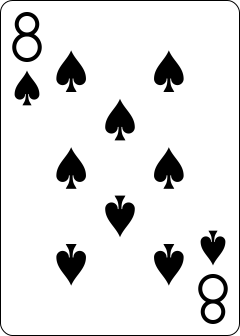
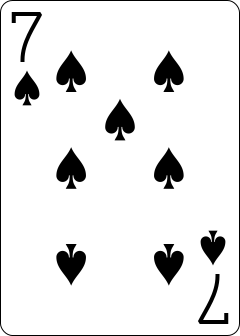
Hero cards
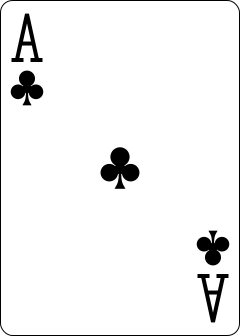
Opponent cards

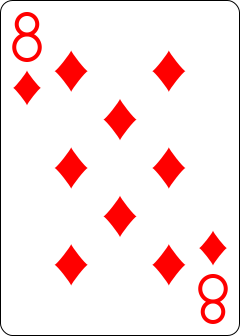
Current board
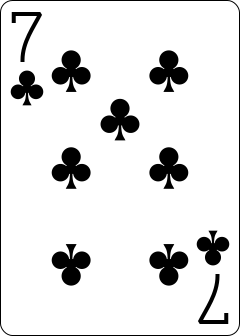
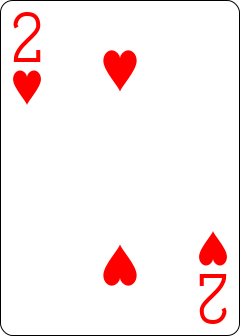
Exact result
74.55%
Hero showdown equity
- Wins
- 1476
- 74.55%
- Ties
- 0
- 0%
- Losses
- 504
- 25.45%
1,980 legal ordered runouts were enumerated; ties contribute half the pot to each player's equity.
02
Hero final-hand distribution
03
Next-card sensitivity
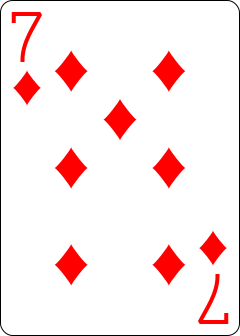
Each row fixes the next card, then enumerates every remaining river. Values explain board changes; they are not betting advice.
Strongest
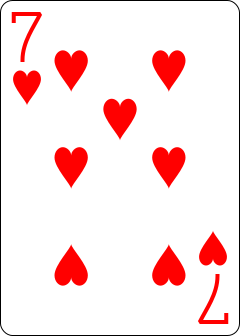
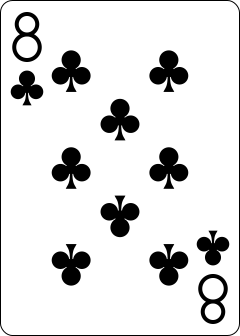
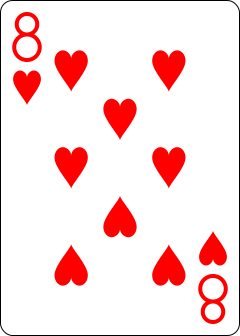
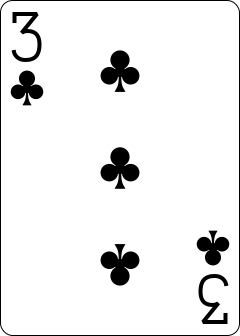
Weakest


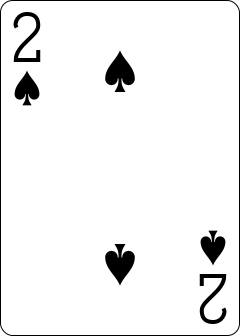
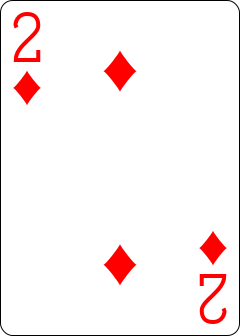
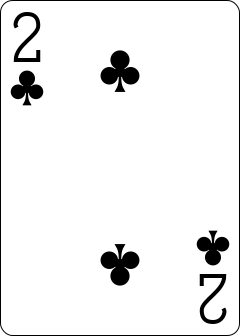
04
How to interpret the result
Two pair is defined by the best five cards, so a double-paired board can remove the value of a private-card pair and let the overpair play.
The hero begins ahead with eights and sevens. An ace directly improves the opponent, while some paired-board sequences change which two pairs count.
Looking only at the next card misses counterfeit sequences that require both turn and river.
Calculation boundary
This study fixes both known hands. It does not infer ranges, fold equity, bet sizes, position, or future action. The program removes known cards from a standard 52-card deck, enumerates every legal community-card runout, and compares final five-card hands with the practice-table evaluator. Build tests recalculate the source data.