Kickers · Hand Lab
How large is the equity gap when both players pair the ace?
Measure a dominated top-pair matchup across every turn and river.
01
Fixed setup
Can the lower kicker rely on splitting the pot often enough?
Hero cards

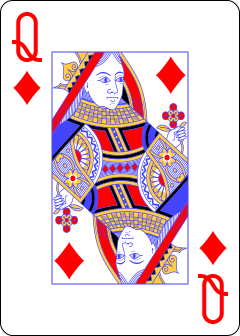
Opponent cards
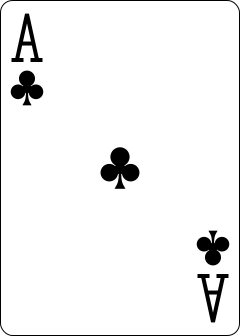

Current board

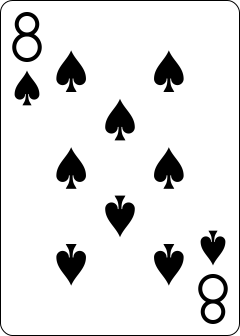
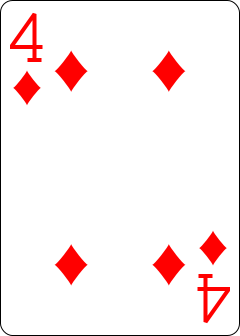
Exact result
86.06%
Hero showdown equity
- Wins
- 1668
- 84.24%
- Ties
- 72
- 3.64%
- Losses
- 240
- 12.12%
1,980 legal ordered runouts were enumerated; ties contribute half the pot to each player's equity.
02
Hero final-hand distribution
03
Next-card sensitivity
Each row fixes the next card, then enumerates every remaining river. Values explain board changes; they are not betting advice.
Strongest
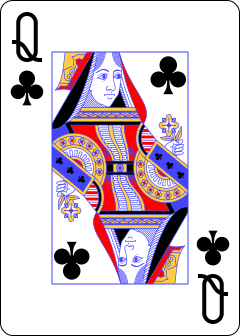
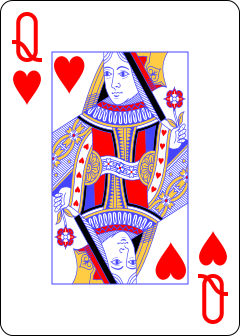

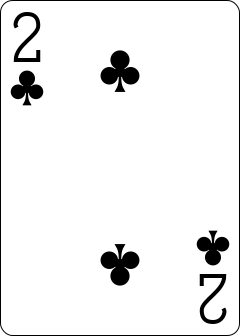
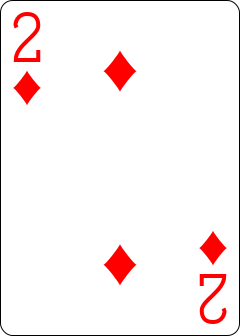
Weakest
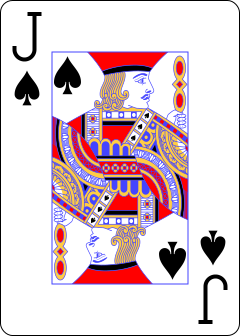
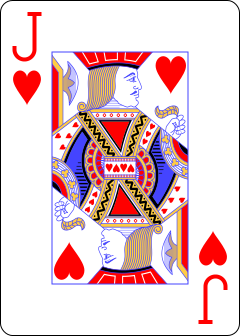
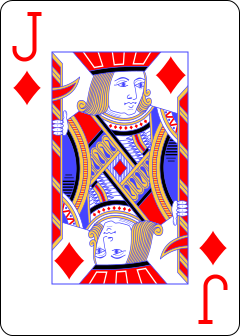
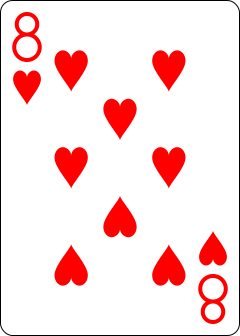
04
How to interpret the result
Shared top pair does not imply a close matchup. The lower kicker needs a jack, a board-driven tie, or a stronger five-card transformation.
The queen kicker currently plays. Many blank runouts preserve that advantage even though both players continue to display one pair of aces.
Board straights, board two pair, and paired kickers explain the tie rate; they should be counted rather than described as vague chop possibilities.
Calculation boundary
This study fixes both known hands. It does not infer ranges, fold equity, bet sizes, position, or future action. The program removes known cards from a standard 52-card deck, enumerates every legal community-card runout, and compares final five-card hands with the practice-table evaluator. Build tests recalculate the source data.