Dominated draws · Hand Lab
Why can the same flush draw have radically different value?
Compare two heart draws when one player holds the ace and both still have pair routes.
01
Fixed setup
Does completing a king-high flush create a winning hand here?
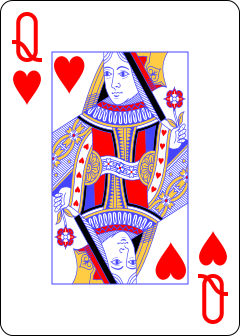
Hero cards

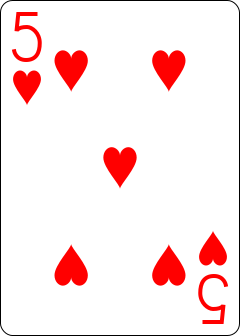
Opponent cards

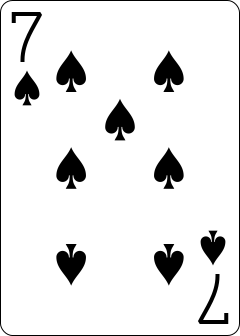
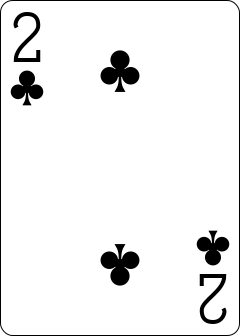
Current board

Exact result
75.05%
Hero showdown equity
- Wins
- 1486
- 75.05%
- Ties
- 0
- 0%
- Losses
- 494
- 24.95%
1,980 legal ordered runouts were enumerated; ties contribute half the pot to each player's equity.
02
Hero final-hand distribution
03
Next-card sensitivity
Each row fixes the next card, then enumerates every remaining river. Values explain board changes; they are not betting advice.
Strongest



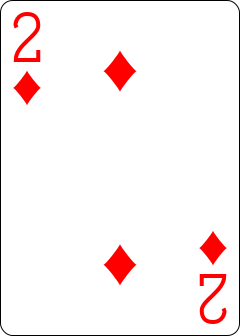
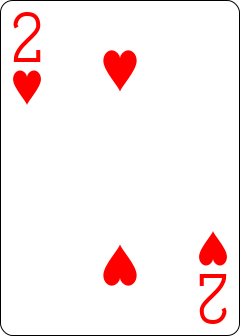
Weakest

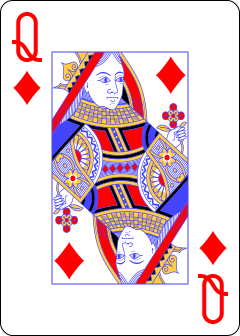
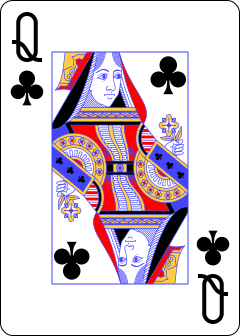


04
How to interpret the result
An out that completes your hand can still be a losing out. Blockers and domination must be evaluated against the actual opposing cards or range.
Any shared heart completion gives both players a flush, but the ace-high flush wins. The lower draw therefore depends more heavily on pairing and straight routes.
This is why raw out counts cannot be transferred between opponents without checking card removal and hand interaction.
Calculation boundary
This study fixes both known hands. It does not infer ranges, fold equity, bet sizes, position, or future action. The program removes known cards from a standard 52-card deck, enumerates every legal community-card runout, and compares final five-card hands with the practice-table evaluator. Build tests recalculate the source data.